Custom Emulative Instruments
Bespoke devices designed to replicate human sensory actions. Each instrument starts with a specific product, a specific consumer, and the perception you want to predict.
Spreading Multifunctional Instrument
Our current-generation gantry platform brings several emulative tests into a single instrument. A precision-controlled silicone finger probe reproduces the way a person spreads, lifts and presses a product — designed to capture spreading tribology, stickiness and stringiness (and shape retention) in one automated system.
Linear and circular spreading paths run under programmable speed and motion profiles, and the platform is engineered to profile friction, tack and thread behaviour across a full product range.
Stringiness meter (ball pull)
A ball probe is pulled through the product and separated — emulating the action of lifting a utensil or applicator. Cameras capture thread geometry during separation.
Described in our published research ↗Shape retention meter (brush)
Measures how product holds its shape after being dispensed onto a brush — a key visual attribute in toothpaste and cosmetics. Image analysis tracks height, width, and slump rate frame-by-frame.
Described in our published research ↗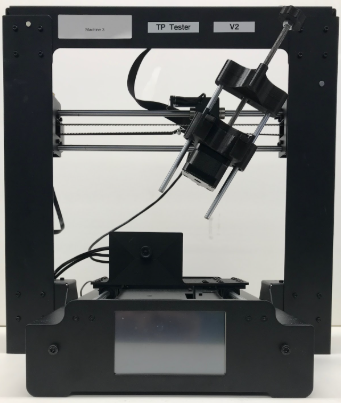
TP Tester V2
The instrument platform behind both stringiness and shape retention measurements above. Interchangeable attachments allow a single device to run multiple emulative test protocols.
Described in our published research ↗Foam dispensing device
For foam products: characterizes the shape and size of extracted material using specialized dispensing fixtures.
Gloppiness device
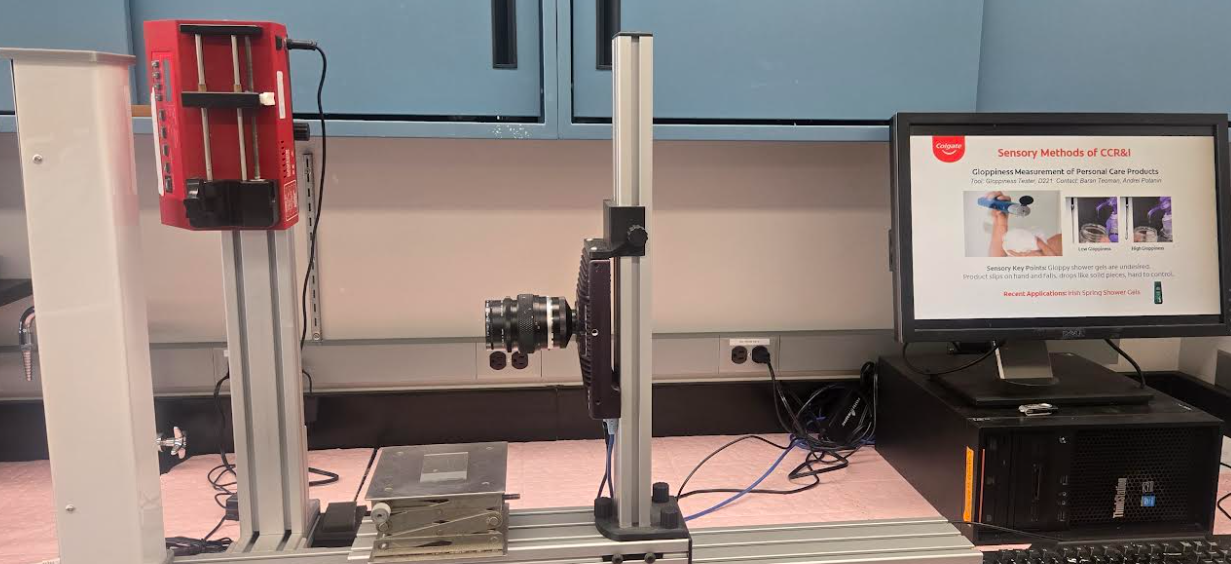
A syringe with a camera tracking discharge geometry. Quantifies how product flows from a container — whether clean and controlled, or irregular and "gloppy."
Shape retention: how it works
Image analysis algorithms measure dispensed product geometry over time. Height, width, and slump rate are tracked frame-by-frame to produce quantitative shape retention scores.
These measurements replace subjective evaluations with precise, time-resolved data that can be correlated directly with panel scores. They also are more direct and reliable than predictions based on rheological measurements.
Gloppiness testing
Gloppiness describes how a product discharges from a container — whether it flows cleanly or drops in an undesirable, irregular way. We developed a syringe-and-camera device to quantify this property objectively.
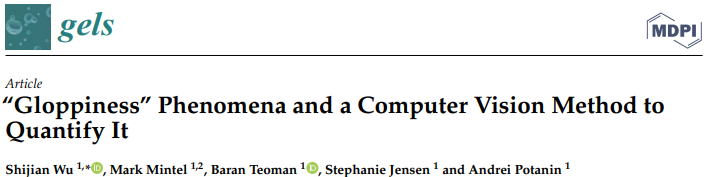
"Gloppiness" Phenomena and a Computer Vision Method to Quantify It — Gels, MDPI
We work with data from instruments you already have
We can begin with existing lab measurements, interpret them against sensory attributes, and only recommend custom instrumentation when the standard tool cannot capture the human action.
Tribometer
Measures coefficient of friction (COF) using a single finger-like ball probe — the foundation of skin-feel prediction for lotions, creams, and sunscreens.
Dispensability testing (tube)
Texture analyzer measuring the compression force required to dispense product from a tube. Correlates directly with consumer perception of "squeezability" and ease-of-use.
Dispensability testing (bottle)
The same texture analyzer protocol applied to a bottle format. Different attachments accommodate different package types.
Stickiness & compression testing
Texture analyzer in compression and probe adhesion modes. Quantifies "sticky" or "tacky" attributes that panels struggle to rate consistently, as well as hardness of semi-solid products.
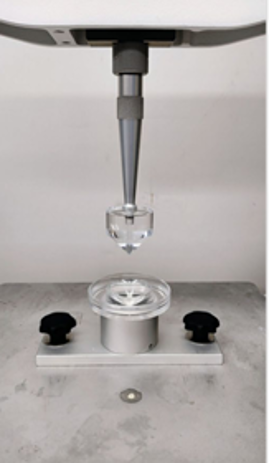
Stickiness probe attachments
Two commonly used probe geometries for adhesiveness measurement — described in detail in our published sunscreen sensory paper. Probe choice determines which aspect of "stickiness" is captured.
Tactile glove
Sensor-equipped glove that measures grip force distribution during product application. Captures the mechanical signature of human touch.
GelSight: microscopy by touch (handheld)
The handheld GelSight device pressed against a surface to capture 3D micro-texture. Measures particle size and surface roughness felt by hand or tongue.
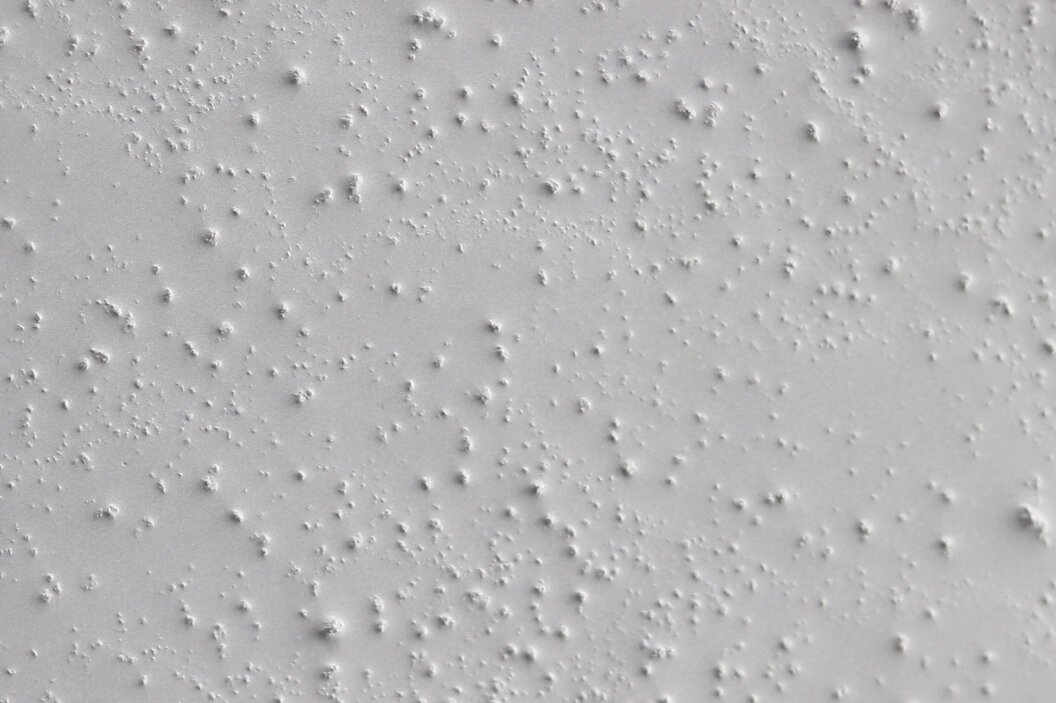
GelSight images
It shows particles or any objects as they are felt by touch rather than as they appear on the surface.
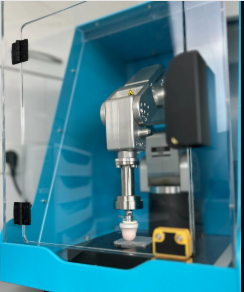
Spread Master (Weneos)
A commercially available spreading instrument that inspired the development of our custom spreading tribometer. Our custom device extends this concept with greater control and sensory correlation capability.
Ready to measure what matters?
Whether you need a custom device for your R&D lab or want to learn how emulative testing can improve your product development pipeline — let's talk.
Contact Us